I find interesting layout and formatting in books, magazines and newspapers, I recreate it in a word processor and I blog about it. My posts include step-by-step instructions for both Google Docs and Microsoft Word.

Recent Posts

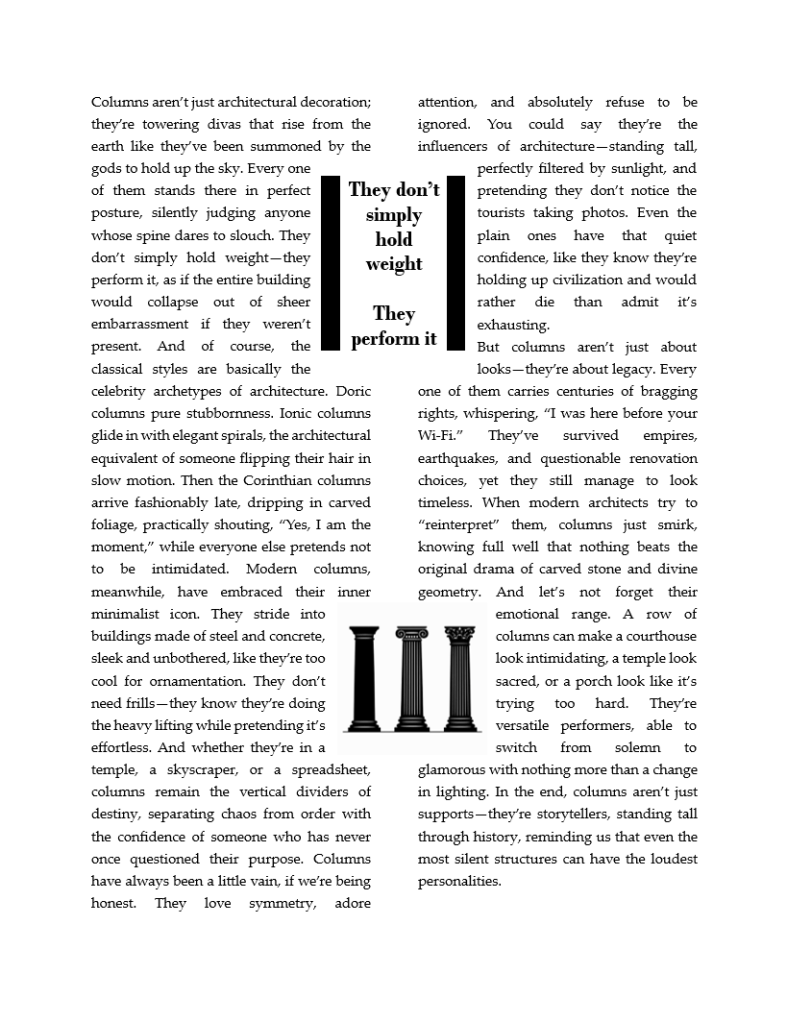
  • Formatting a document with multiple columns is simple once you know where to locate the columns feature. This example also has justified alignment, which evenly aligns your text along both the left and right margins.

    You can break up the page and add visual interest by adding objects like callouts, which are designed to draw attention to specific information.

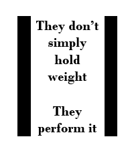
    The first callout in this document was created using a 1-row, 3-column table.
    The second is a graphic created by an AI assistant. It adds interest to the page and gives you an idea of what the article is about (yes, it is about columns).


    Below is a list of features used to create this article. If you would like step-by-step instructions, click the links next to the feature you would like to learn.

    Step 1: Create a new 2-column document with justified alignment.

    Step 2: Add the first callout – a 1 row table

    Step 3: Add the second callout – an AI generated illustration
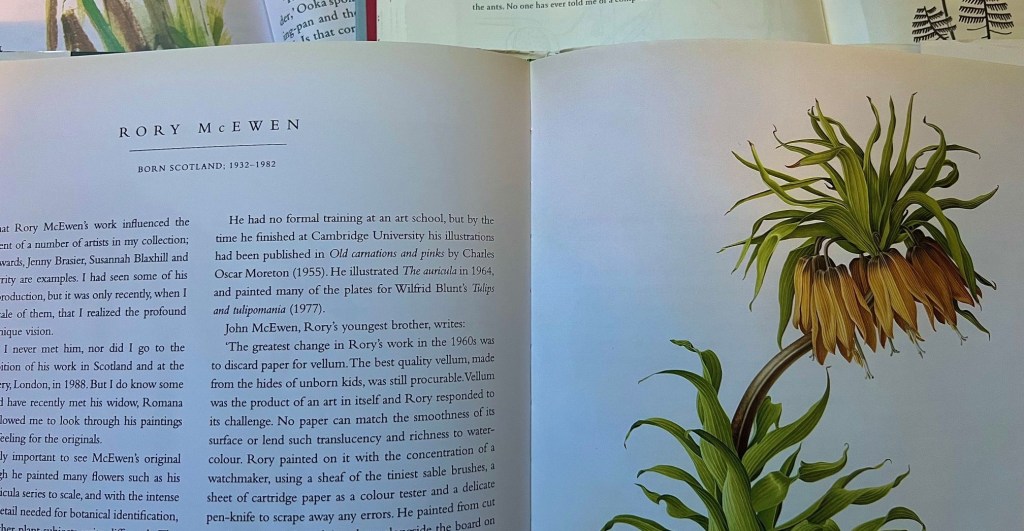

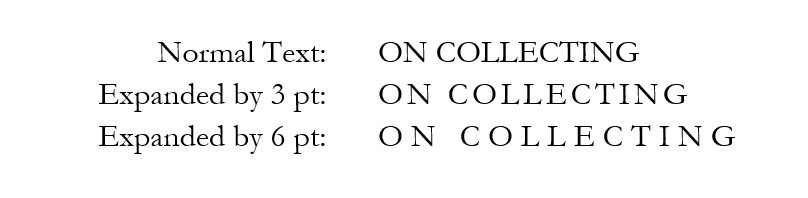
  • In Contemporary Botanical Artists (Sherwood, 1996), the chapter titles use generous spacing between letters—a design choice that gives them the same elegant look as illustrations and text.

    Character Spacing

    One simple and effective way to recreate this layout is Character Spacing. By fine-tuning the distance between letters, you can emphasize key phrases and titles.


    In Microsoft Word, you will find Character Spacing in the Advanced Font dialog.

    While Google Docs does not have this feature, staying curious pays off – each time I ask Google’s AI assistant about it, I learn something new about Google Docs.

    Try It in Microsoft Word
    1. Select the text you want to format as expanded.
    2. In Font options, click the Advanced tab.
    3. Select Spacing and select Expanded, 6pt.
    Ask an AI Assistant about Google Docs Support
    1. Navigate to gemini.com or copilot.com.
    2. Enter the prompt:
      how do I use character spacing in google docs?

    Shirley Sherwood, Contemporary Botanical Artists, (New York, Cross River Press, 1996), page 11.


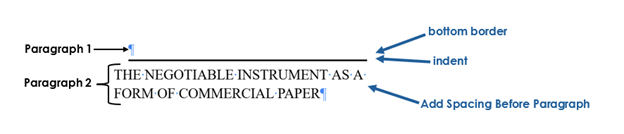
  • The section headings in Barron’s Business Law have a top border that is indented while the text of the heading is not.

    You can recreate this formatting in Google Docs or Microsoft word by:

    • adding a bottom border to the paragraph above
    • adding an indent to the paragraph above
    • using the Add Spacing Before Paragraph feature

    Below is a diagram of the final text:

    Try It!

    Part 1: Create the heading

    1. Type the text shown and format it as Times New Roman, 26pt , UPPERCASE.
    2. Select the Add Spacing Before Paragraph feature.

    Part 2: Add and Indent the Border

    1. Insert a blank line before the heading.
    2. Add a 3pt bottom border.
    3. Indent this blank paragraph to 1 centimeter (.4 inches).

    Emerson RW. Business Law. Barrons Educational Services; 2015.